Introduction
Sustainability has emerged as one of the top drivers of real estate development and investment in recent years. Potential homeowners and investors are more attracted than ever to environmentally friendly design, renewable energy systems, and innovations in energy-related technology. It’s notable that green builds are no longer a niche but a norm; green real estate now comes in the form of rooftops plastered with solar panels, smart water systems, and much more.
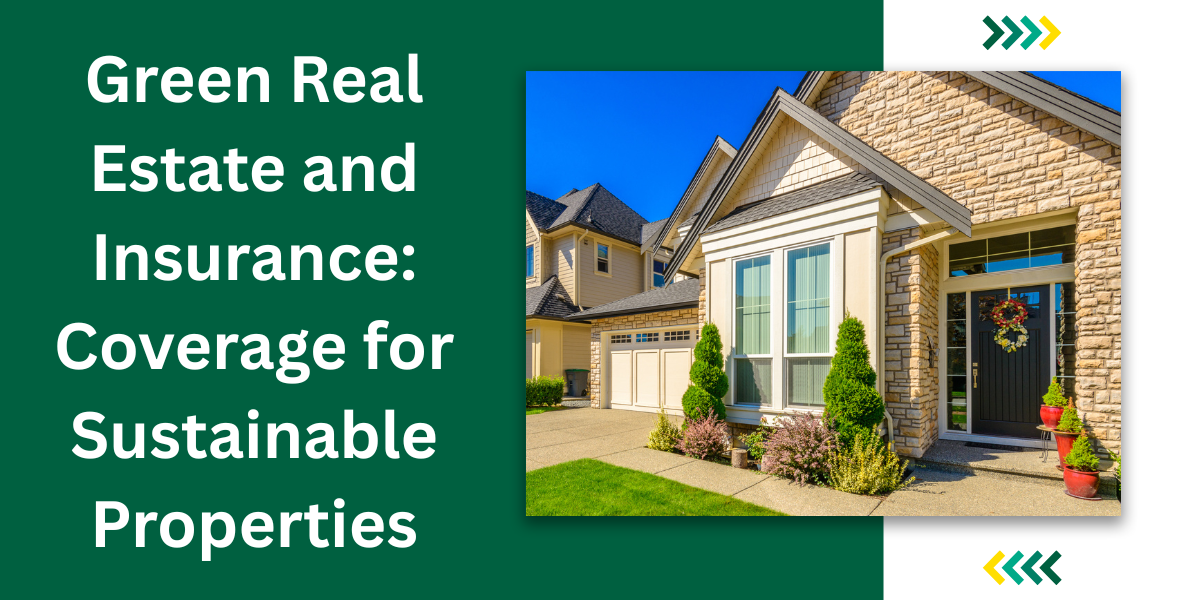
Sustainable properties lower energy bills and decrease environmental impact, but at the same time, they present unique insurance issues. If you are an owner of a sustainably built structure, returning your coverage premiums will be similar to typical coverage yet never identical, and protection to this asset will vary.
The Growth of Green Real Estate
Green real estate is property developed with sustainability as a priority. It includes:
- Renewable Energy Systems – such as solar panels and wind turbines, or geothermal heating
- Energy Efficiency – such as a smart thermostat, LED lights or good insulation
- Eco-friendly Building Materials – such as recycled steel or reclaimed wood, and low VOC paints
- Water Conservation – including systems to harvest rainwater and recycle greywater
- Sustainable landscaping – such as native plants and irrigation systems that will conserve water
These features will not only reduce the carbon footprint of a property, but also increase its resale value. Buyers will often pay more for a property that will provide lower energy costs, and aligns with their environmental values.
Sustainable Properties and Insurance Considerations
While green upgrades are attractive for their features, they will change some aspects of insurance considerations:
1. Higher Repair and Replacement Costs – Green replacement materials and eco-friendly technologies are, in general, much more expensive to repair or replace than standard materials.
2. Risky Alterations to Equipment – Solar panels and wind turbines may be vulnerable to weather damage, vandalism, and malfunction.
3. Limited Coverage – Not all insures have coverage designed for green homes, and some may not cover certain technologies or related property.
4. Contractor Availability – Repairing these modifications may require contractors with specific training or expertise, driving up the costs associated with claims.
5. Liability Risks – Rainwater harvesting systems or similar systems may create liability risk due to not properly maintaining these systems.
Insurance Options for Eco – Friendly Property Owners
To meet this challenge, many insurance companies provide “green endorsements” or dedicated sustainable property coverage. Options can include:
- Green Upgrade Coverage – This protects you in the event your property is damaged and repairs must be completed using green materials rather than non-green materials that are cheaper.
- Solar Panel Insurance – This applies specifically to rooftop panels and will cover damage from weather events, theft, or breakdown.
- Energy Efficiency Reimbursement – This would be in addition to your regular policy and would pay the cost of replacing that item with energy efficient (and more expensive) models when the damage is covered under your regular policy.
- Water System Coverage – This would cover eco-friendly water features like greywater recycling, rainwater tanks, or similarly designed projects.
- Business Interruption Coverage for Commercial Green Buildings – This will help ensure businesses do not incur a financial hardship as the result of the eco-systems not functioning properly.
Advantages of Insuring Eco-Friendly Properties
Interestingly, eco-friendly materials do not always result in higher premium costs. In fact, they can significantly reduce your insurance premiums in some cases:
- Less Fire Hazard – Today’s energy systems and insulation greatly limit a fire hazard when taking an eco-friendly approach to build.
- Enhanced Security – Most smart home technology in addition to monitoring for fire and climate will also include surveillance that is typically installed to deter burglaries and theft.
- More Durable – Many eco-friendly materials, such as recycled steel, can outlast traditional materials that are not eco-friendly.
- Discounts for Certification – Homes with certifications like LEED (Leadership in Energy and Environmental Design) may receive lower premiums based on the certification.

Advice for Green Homeowners
If you own or are considering purchasing a green property, take steps to ensure your insurance matches your house:
1. Before Installing New Systems, Talk to Your Insurer! – If you’re thinking of putting solar panels on your roof or other green features, your insurance may be affected.
2. Ask About Specialized Coverage – Ask your agent whether they offer green endorsements or riders for renewable energy systems or other green upgrades.
3. Keep Receipts and Documentation – Retain all receipts, warranties, or professional certifications related to green installations.
4. Review Your Policies Annually – Technology is changing rapidly, and your coverage should change with it.
5. Work with Eco-Conscious Insurance Companies – Some insurance companies offer sustainable property coverage with specific benefits.
Conclusion
Green properties represent the future of real estate ownership – sustainable, efficient, and environmentally conscientious. However, without proper insurance coverage for your eco-conscious features, the benefits of your green home can easily become hazards. Whether it is a solar panel, graywater system, or rainwater system, every green property feature should take into account its environmental impact and their risk management, too.
By reviewing specialized insurance policies, whether as a homeowner or an investor, you can be assured that in the event of a loss, your sustainable property will always remain both green and financially sustainable. Going green shouldn’t expose you to another layer of unnecessary risk, but allow you to create a safer, smarter, and resilient home to enjoy.